


Founder, Continuum · President, UCLA Chapter
Sherry Peng
Sherry is a junior physics major at UCLA and is a transfer student from West Valley College and Mission College in the Bay Area. Her passion centers on physics outreach, academic programming, and the design of rigorous, large-scale initiatives that connect students to research, faculty, and the broader physics community.
She previously served as Outreach Chair for Sigma Pi Sigma, UCLA’s Physics Honor Society, where she led external academic programming and authored the organization’s largest grant to date, supporting physics education and student engagement. Through this role, she developed experience in building student-centered, faculty-connected initiatives that operate beyond the internal walls of a single university. All of this work was undertaken during her first quarter at UCLA, during which she was accepted to Sigma Pi Sigma, served on its board, and additionally founded and chaired the Academic Affairs Committee, which facilitated exam review sessions for all introductory physics courses, serving 80+ students.
In February 2026, she organized the Physics Transfer Summit at Los Angeles Pierce College, a first-of-its-kind event that brought together 112 attendees from 35 institutions and 21 majors. The summit featured 15 speakers spanning fields from quantum gravity and gravitational-wave astrophysics to medical physics and neurophysics, with faculty from UCLA, USC, Caltech, LMU, and Pepperdine, as well as UCLA graduate students and successful physics transfers. The event was designed to expose community college and physics-adjacent students to the breadth of physics at a rigorous level while providing clear guidance on pathways to research, transfer, and academic careers.
Alongside her outreach work, Sherry currently conducts medical physics research at UCLA in Catherine Meyer's Lab under the Department of Nuclear Medicine. Her current research focus is on error correction within PET/SPECT imaging. She has also previously conducted research at Stanford in biochemistry focused on ALDH2 and how flavorings in e-cigarettes inhibit acetaldehyde metabolism, where she published an abstract as a first author in The Journal of Pharmacology and Experimental Therapeutics in March 2025 and presented her work at various poster sessions and oral symposiums, combining wet-lab research with broader questions at the intersection of public health and science communication.
She also placed 1st and received People’s Choice Award out of 7 finalists in the 2025 Tobacco-Related Disease Research Program (TRDRP) Symposium at Oakland Marriott City Center for best research scientific pitch for general audiences in 3 minutes. She was the only undergraduate finalist and presented on how flavorings in e-cigarettes represent stable, fundamental compounds that can be studied to stay ahead of industry-driven changes. Judges included esteemed mid-late career investigators from different universities in the U.S. The competition was judged on clarity, organization, delivery, relevance, intellectual significance, engagement, and accessibility to general audiences with no technical jargon. The People’s Choice Award was determined by votes from the audience. TRDRP is a grant program paid for by CA state tobacco taxes ran under University of California.
Finally, Sherry has tutored all offered math and physics courses at West Valley College, where she developed a deep understanding of how effective education, particularly the use of analogies and physical intuition on fundamental topics, dramatically improves conceptual understanding, retention, and the ability to apply concepts in new contexts.
Through Continuum, she aims to create programs that treat clarity of scientific communication as a marker of mastery, incentivizing intellectual rigor while expanding access to high-level physics across institutions and disciplines.

Outreach, UCLA Chapter
Riddhi Shedge
Riddhi Shedge is an astrophysics major at UCLA, with extensive experience spanning original research, scientific leadership, and large-scale STEM education initiatives. Her work sits at the intersection of rigorous astrophysical research and accessible, student-driven science outreach, reflecting a commitment to both discovery and impact.
Riddhi is currently conducting research at UCLA in Professor Alvine Kamaha’s Astroparticle Physics Laboratory, contributing to dark matter detection efforts associated with the LUX–ZEPLIN experiment. Her work is focused on low-level radon measurement and mitigation, including operating and testing radon detection systems, collecting and analyzing environmental data, and developing Python code to retrieve and process detector data offline.
Riddhi has conducted advanced astrophysics research through nationally selective programs, including the Monterey Institute for Research in Astronomy (MIRA), the California State Summer School for Mathematics and Science (COSMOS) at UC Irvine, and the Summer Science Program (SSP) at University of North Carolina (UNC). Her research experience includes processing and modeling hundreds of stellar spectra using Python, IRAF, ATLAS9 atmospheric models, and TURBOSPECTRUM synthesis, resulted in co-authoring a paper in a peer-reviewed journal and presenting her work at an international conference. She has also led galaxy-scale analyses, constructing a rotation curve of the Andromeda Galaxy from 21-cm hydrogen line data to quantitatively confirm dark matter dominance. In parallel, she conducted asteroid orbit determination using classical celestial mechanics and Monte Carlo uncertainty analysis, co-authoring a 25+ page technical paper with results archived by the Minor Planet Center.
She is a US Astronomy & Astrophysics Olympiad Top Scorer (Top 15%) and qualified for the National Astronomy Competition and is a finalist in the International Astronomy & Astrophysics Competition (IAAC) and received the Bronze Award (first student in her high school to be a finalist).
Alongside her research, Riddhi was the founder and president of Monta Vista High School's Astronomy Club and Space Odyssey, an astronomy education organization that has delivered free workshops to K–6 students, partnered with schools to launch astronomy clubs, expanded chapters across multiple U.S. states, and begun international growth. She has independently executed fundraising efforts, developed curriculum, trained student leaders, and scaled programs.
Riddhi’s leadership extends beyond astronomy. She has captained her school’s first all-girls Science Bowl team, served as President of the Bay Area Youth Toastmasters chapter, and mentored dozens of students across physics, programming, and public speaking. Her communication excellence is nationally recognized through repeated qualification to speech tournaments and top-50 rankings in California for Original Oratory.
Across research, leadership, and outreach, Riddhi embodies Continuum’s core vision: serious science pursued at the highest level, paired with deliberate efforts to widen access, cultivate talent, and build enduring scientific communities.
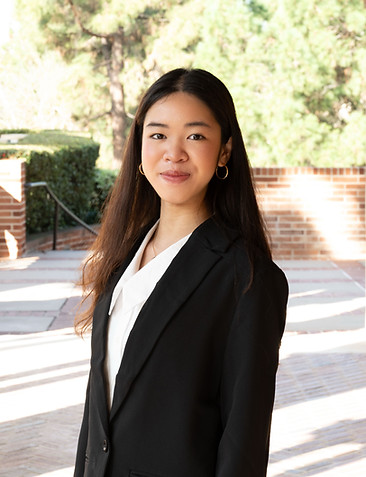
Outreach, UCLA Chapter
Pearl Shaw
Pearl Shaw is an astrophysics major at the University of California, Los Angeles, with a background spanning biomedical research, scientific communication, and large-scale athletic and educational leadership. Her work reflects a sustained engagement with rigorous research alongside a commitment to mentorship, public education, and interdisciplinary inquiry.
Pearl is currently conducting research at UCLA in the Huan Huang Laboratory within the Department of Physics and Astronomy, contributing to studies in quantum chromodynamics and neutrino physics. Her work involves developing C++ analysis scripts to study high-energy particle collision data from the Relativistic Heavy Ion Collider, analyzing elliptic flow to characterize the hydrodynamic properties of quark–gluon plasma while processing large datasets to isolate physical signals from detector noise.
Pearl has conducted research across multiple laboratories at National Yang Ming University, where she served as a research assistant in both the Brain Sciences and Physics departments. Her work in neuroscience focused on post-stroke rehabilitation in rodent models, investigating functional, physiological, and cognitive outcomes following middle cerebral artery occlusion. This research was recognized with an Outstanding Research Award at the National Yang Ming University Scientific Conference. In parallel, she conducted research in a modern optics laboratory, working on long-working-distance fluorescence detection and biomedical imaging applications. Her research interests reflect a consistent focus on the intersection of physics, biology, and human health.
Beyond research, Pearl has held extensive leadership roles across athletics, education, and communication. She served as Captain of the Junior National Squash Team of Taiwan, competing internationally at the World Junior Individual and Team Championships, and was ranked the top junior player nationally for seven consecutive years. She is also the founder and head coach of Squash for Smiles, a nonprofit initiative that has taught squash to over 450 children across Taiwan, raised funds to build a court at an underprivileged school, and developed community-centered athletic programming.
Pearl has additionally served as a teaching assistant at the National Palace Museum, and a national-level chess competitor, qualifying for elite international competitions. Across these roles, she has demonstrated a capacity to translate technical knowledge into accessible instruction, mentor peers and younger students, and lead complex programs that operate at scale.
Within Continuum, Pearl contributes a perspective shaped by interdisciplinary research, international experience, and a demonstrated ability to build educational and mentorship initiatives that connect rigorous science with broader communities.